
So, what is this? This is me sharing what excites me with you, fellow reader.
We are headed to math models of systems, but there is a bit of journey to get there.
It’s interesting as I think about it, because I think my schooling + hobbies shaped this, which I didn’t really realize until now.
I guess this would start back in Linear Algebra - I was taking the class and had heard it was an important one, but I wasn’t really getting it. We touched on how we could use the math for computer graphics, which sounded neat to me. I mean, how do we represent 3D graphics on a 2D screen… kind of a cool question. Unfortunatley, we didn’t really touch on that.
Queue my first co-op, and I had time to start exploring some of the stuff we did in school in a more leisurely setting. This led me into finally learning about computer graphics. I would end up revisiting graphics a number of other times over the years, because it really is cool.
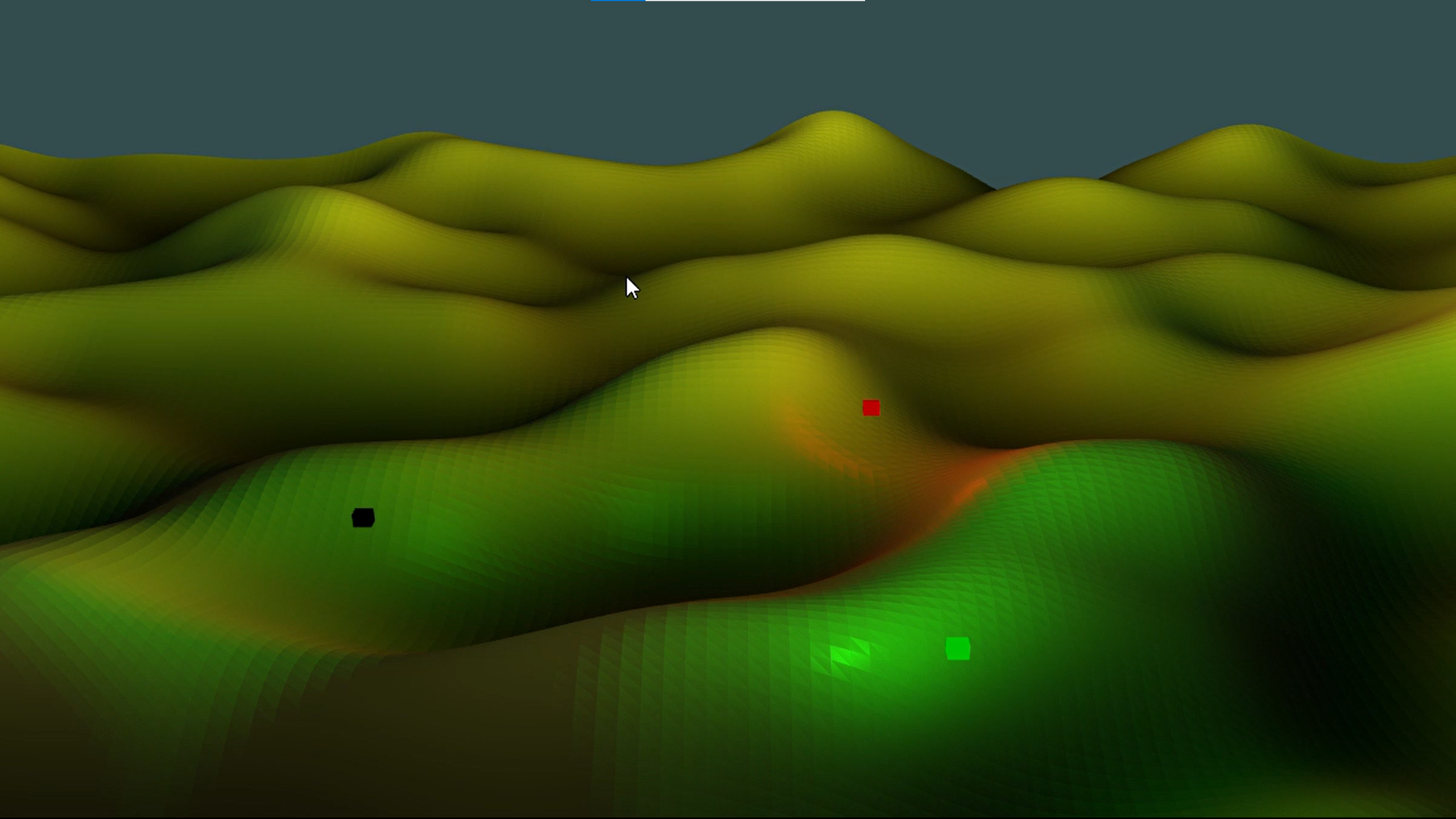
In a similiar domain lays computer music. What interested me, like the computer graphics, was - how can we create music with a computer?
More specifically, I had dabbled in piano over the years and thought it would interesting to see if I could make piano sounds with computer programming.
Turned out it was a lot more complicated (and fun) than anticipated. It’s pretty fun experimenting with sound design, and doing it all programatically.
The problem was I still wasn’t getting the piano sound I wanted.
I eventually found out about music synthesis through physical modeling. That means developing mathematical and physical models of instruments and letting the models create the sound. Whoah. Yes, whoah.
The base of these models typically is a wave equation, which meant I finally got to dabble in partial differential equations. At the time I was learning about solid state electronics and Shroedinger’s Equation, so it was nice way to bring the ideas home.
I ended up getting involved in music/electrical engineering research at school, which really gave me the oppurtunity to deep dive into trying to solve increasingly complex wave equations.
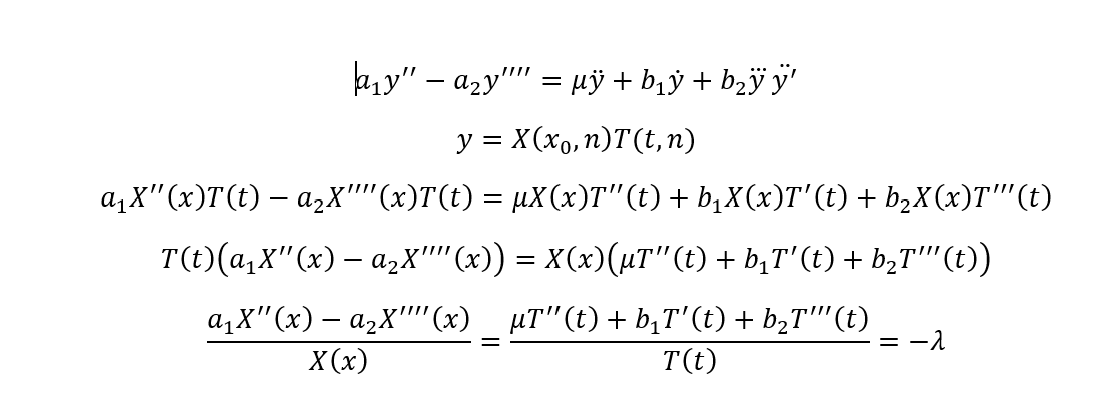
I was helping a graduate student work on using machine learning to identify guitar notes. Part of the work involved having an analytic synthesizer of guitar sounds, which meant a very excited me go to work on modeling the sound of guitars and their strings with wave equations!
Now all the pieces that got me to where I am today were in place, and everything comes full circle.
I had seen techniques from math, physics, and electrical engineering intersect with some of my big interests - and really loved it. I was wondering what I could do with this.
Controls engineering actually does a lot of these things - math models are made of systems and analyzed to see how to control aspects of the system. But it seemed to me that another area did this even more - physics, which was all about making math models of systems!
So that’s what’s next with me. I want to combine my love of math, physics, software, and electrical engineering to study systems, analyze them, and synthesize them to better understand them.
I see myself going into photonics or solid state electronics as those areas really are the intersection of EE, physics, and all have many or all of the topics that I am interested in.
Thanks for reading  .
.